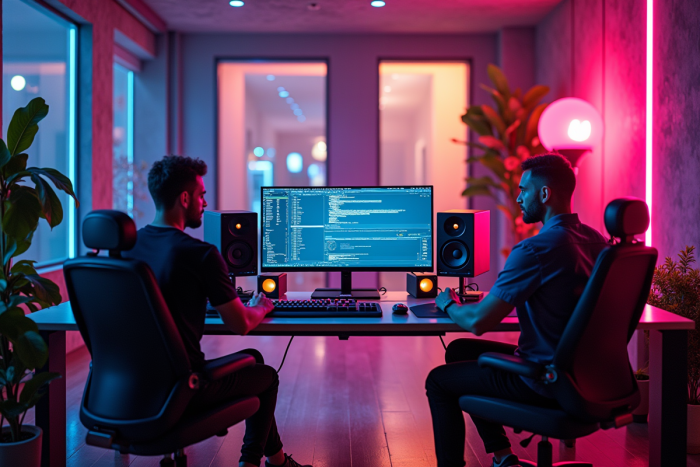
An algorithm that generates images in a matter of seconds: this is what, just yesterday, belonged to science fiction, and today is shaking up the behind-the-scenes of the audiovisual industry. Animation studios juggle with pipelines of varying geometry, constantly reshaped by the slightest software advancement. With each update, an entire creative process wavers, forcing teams and creators to rethink their ways of working. Some award-winning films now incorporate sequences entirely designed by artificial intelligence, while other filmmakers draw a red line, refusing these tools in the name of claimed artisanal mastery. The boundary between technological innovation and artistic expression is becoming a shifting ground, imposing new choices, sometimes delicate, on all those who create images.
When technology enhances cinematic art: current observations and challenges
Today’s cinema is built at the crossroads of technology and audiovisual, in a constant dialogue between innovation and aesthetic research. Some festivals like the World AI Film Festival (WAIFF), supported by the Alpes-Maritimes department, the House of Artificial Intelligence, and the EuropIA Institute, embody this transformation: hybrid films are showcased here, where humans share creation with machines. In Paris, professionals like Sarah Lelouch or screenwriters such as David Defendi question the place of science in the act of creation.
But another topic emerges in this shifting landscape: intellectual property. Who holds the rights to a work shaped by both a person and an algorithm? The tools offered by Genario Studio, which support producers, directors, and authors, illustrate how new technologies demand unprecedented answers. Laura Tocmacov Venchiarutti, founder of ImpactIA, emphasizes the need to rethink the relationship between humans and machines in creation.
Amidst this excitement, new initiatives are emerging. One can mention France Vidcaps, which highlights the alliance between technological performance and aesthetic choices, while raising the question of the author’s role in the age of artificial intelligence. Collaborations between WAIFF, TechCannes, and Studio Laffitte reveal the energy of a sector where technological development becomes a driving force for new artistic forms.
Here are the main changes currently transforming the professions of image and sound:
- New professions, restructuring of production chains, and a renewed perspective on visual arts.
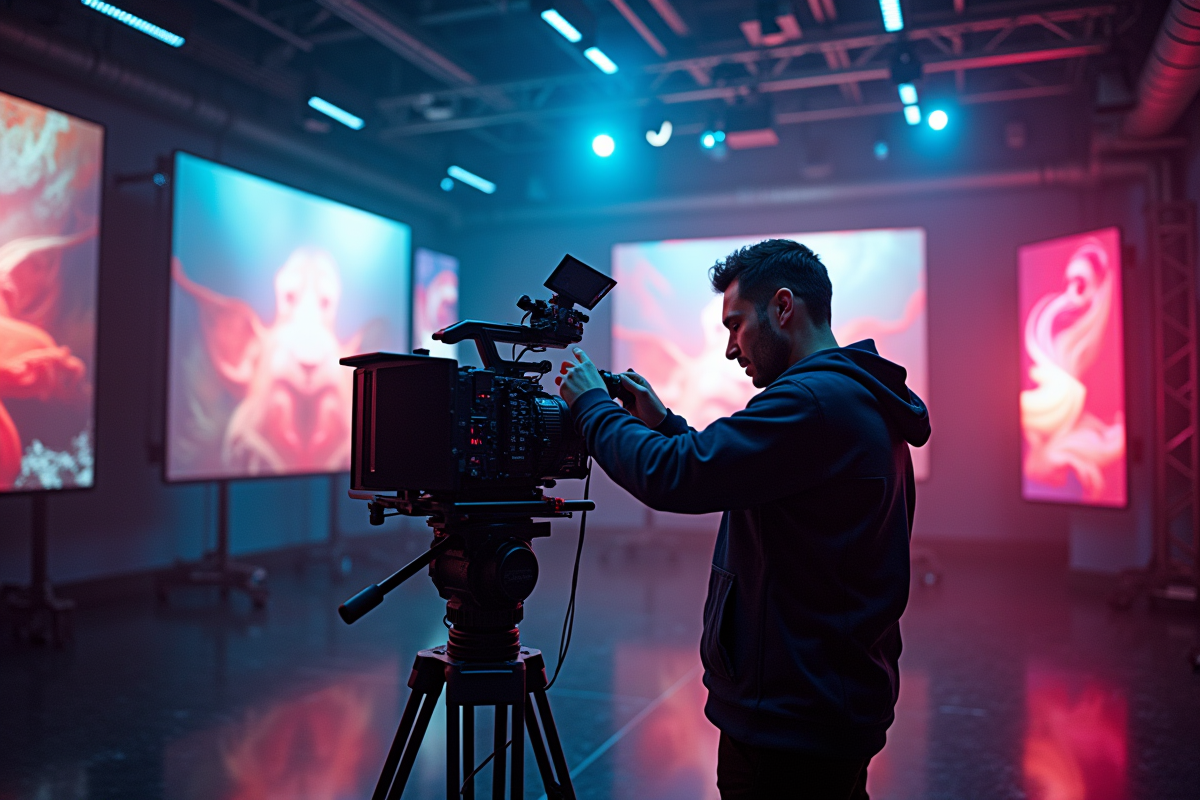
Innovation or disruption? New audiovisual aesthetics tested by digital
The digital revolution is no longer confined to technique: it reshuffles the cards of audiovisual production and shapes unprecedented visual codes. Objects initially utilitarian, like the LED masks from CurrentBody, seen in the series Emily in Paris on Netflix, become visual icons. The narrative takes hold of them, social networks, TikTok, Instagram, YouTube, amplify the phenomenon: these accessories rise to the rank of technical and cultural symbols, imposing new aesthetic standards.
In this landscape, artificial intelligence offers unprecedented customization possibilities for both works and viewer experiences. Applications such as INCI Beauty, developed in partnership with Sigma Clermont-Ferrand, allow for in-depth analysis of cosmetic product compositions. Science, innovation, and technical know-how intertwine, giving birth to works that focus on personalization, speed, and the combination of different mediums. Now, artistic projects embrace interactivity, a direct relationship with matter or image, and challenge habits.
Brands like Lancôme or Guerlain invest in biotechnology and clean beauty: they offer personalized solutions while integrating a responsible dimension. Inclusion is progressing, thanks to innovations like Lancôme’s Hapta or L. Raphael’s oxygen propulsion, which redefine the contours of beauty. Today’s trends sit at the junction of science fiction and reality: audiovisual creation draws inspiration from both technology and the human and social sciences.
Three main dynamics shape this new landscape:
- Advanced personalization and at-home support
- Aesthetics shaped by digital and social networks
- Ethics and sustainability at the center of creative concerns
Between the glow of a screen and the artist’s hand, the boundary has never been so thin. How far will we go? This is where the next chapter of the dialogue between innovation and aesthetics is being written.