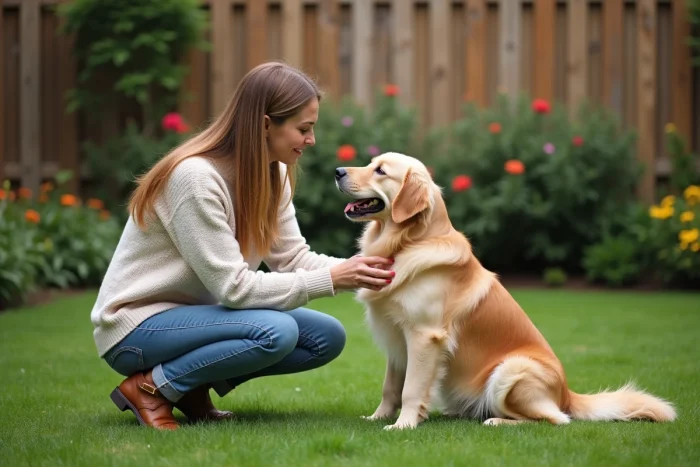
A dog can perfectly understand up to 165 words but may ignore a command repeated more than three times. Learning follows logics that are sometimes contrary to intuition: reprimanding an undesirable behavior after the fact yields no results, while a simple signal given at the right moment changes everything.
Understanding your dog: decoding its needs and language on a daily basis
Decoding canine language begins with observation. A dog speaks without words: its posture, the tension or relaxation of its tail, its facial expressions, every detail composes a silent sentence. A repeated yawn, the angle of an ear, a curved back: these are clues that should not be brushed aside. These signals express much more than simple tiredness; they reveal an emotion, a request for space, or a vague anxiety. Knowing how to read this body grammar helps avoid many misunderstandings and adjust one’s behavior to that of the companion.
From the first days at home, around two months old, education begins. But it is not limited to learning a few magic words. It requires unwavering consistency: every member of the household must use the same commands, or else confusion will ensue. A dog exposed to contradictory instructions hesitates, becomes anxious, and ultimately no longer knows which master to obey. Children also have a role to play: learning to respect the dog, to recognize signs of annoyance, and to know when it’s time to let the animal take a break.
An adult dog never stops learning. Adapting education to its personality and pace takes precedence over cookie-cutter recipes. Some progress quickly, while others require patience and consistency. The key word? Observe, remain consistent, and prioritize gentleness. For those looking to deepen their knowledge, leschiensnefontpasdeschats.fr (Dogs Don’t Make Cats – Animals First) offers reliable resources on dog training, socialization, and understanding a dog’s emotions. This supports every step, from puppy to curious adult.
What gestures and habits promote positive and lasting education?
Three pillars structure dog education: regularity, patience, and consistency. A dog detects even the slightest change in mood or habit instantly. If the rules change from one day to the next, or from one person to another, learning unravels and progress stagnates. Sometimes, it only takes a different word or a muddled command to derail momentum.
Positive reinforcement has changed the game. A good behavior, rewarded immediately with a treat, a pat, or a game, becomes ingrained. Punishment, on the other hand, only generates stress and undesirable reactions. It is better to value every correct initiative than to rely on coercion. Here are the fundamentals to implement:
- The basic commands, “sit,” “down,” “stay,” recall, and leash walking, form the foundation of safety and a peaceful shared life.
- Practicing recall in varied environments ensures the dog’s safety, especially during walks.
- Early socialization, by multiplying encounters and situations, helps the dog manage its emotions and avoid inappropriate reactions once adult.
- For house training, nothing beats frequent outings and immediate rewards. There’s no need to get upset or punish: regularity always pays off.
Learning sessions should remain short, rhythmic, and enjoyable. If a difficulty arises, consulting a dog trainer or relying on reliable online resources can help overcome obstacles without losing confidence. The key, as always: consistency, kindness, and adaptation to each temperament.
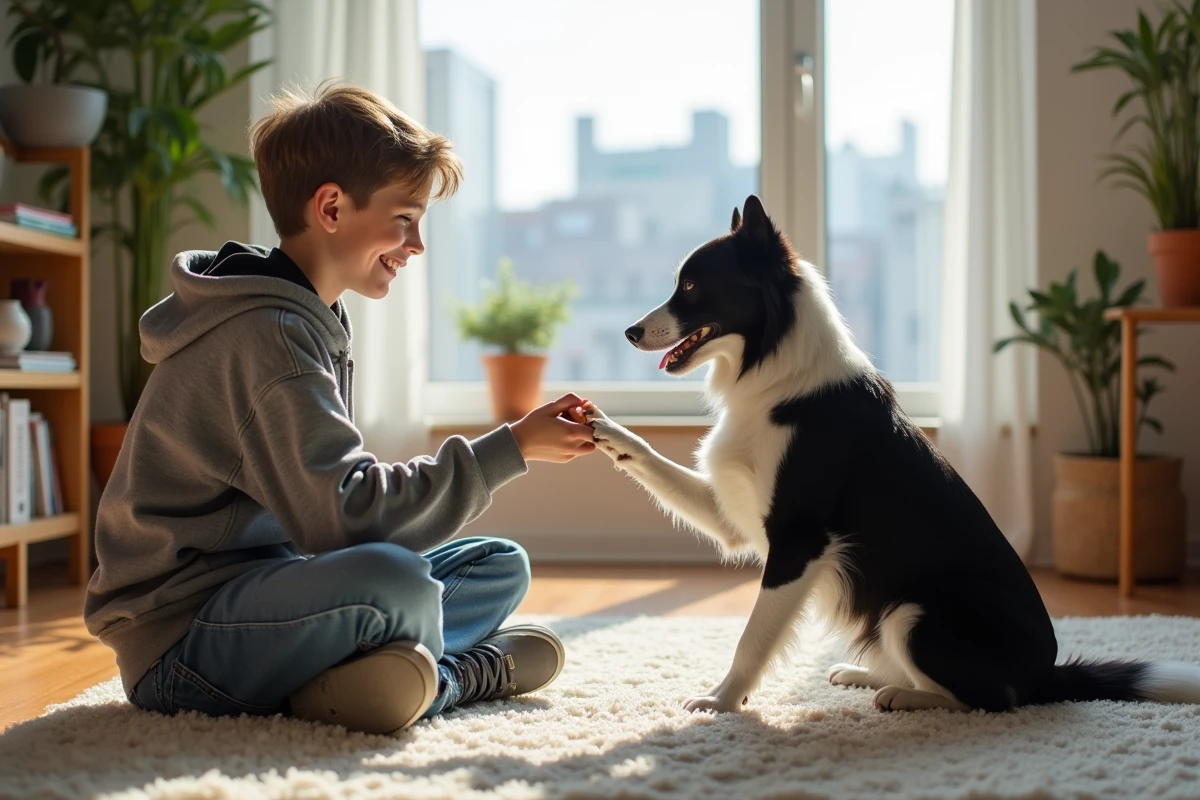
Concrete tips for solving everyday challenges
Managing small daily challenges requires a good dose of method and a keen sense of observation. A dog that chews on a shoe, barks incessantly, or stares at you for a long time is not trying to challenge you: it often expresses an ignored need, excess energy, or discomfort. Occupation toys are valuable allies: they channel attention, prevent destruction, and create calm moments. To maintain their interest, vary the textures, alternate objects, and regularly introduce small novelties.
Separation anxiety is addressed in stages. It involves teaching the dog, gradually, to accept your absence. Leave the room without ceremony, then slowly extend the duration. A piece of clothing with your scent or a specific toy reserved for these moments helps soothe stress. If the challenge remains too difficult, distract its attention with a positive activity, such as a training session or an interactive game.
Certain habits facilitate managing modern life. Getting your dog accustomed to a muzzle, for example, can be useful for vet visits or transport. Introduce this accessory gradually, associate it with rewards, and it will become neutral, even pleasant. Also, consider adjusting the kibble ration if training sessions are rich in treats; the dog’s dietary balance depends on it. As for the crate, it should remain a place of rest, never a punishment or isolation, lest it become a source of stress rather than comfort.
Over the days, every small gesture, every repeated word, shapes the relationship and trust. Training a dog, ultimately, is about moving forward together, step by step, toward a lasting and vibrant companionship. There’s no need to train a perfect animal: it’s enough to learn to understand each other, and daily life will be transformed.