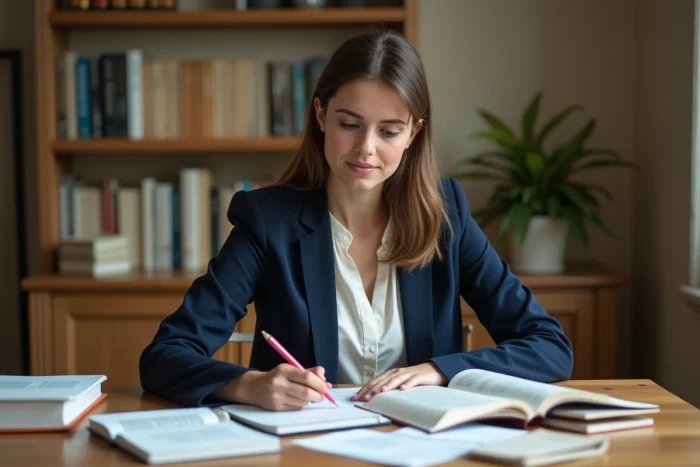
An eligible candidate for the CPE competition opens the jury reports from the last three sessions and realizes that the negative remarks almost always focus on the same point: superficial answers, disconnected from the school environment. The jury members are not looking for a recitation of official texts; they want to hear someone capable of reasoning in the face of a concrete educational situation. All preparation for the CPE oral exams benefits from this observation.
Jury Reports of the CPE Competition: The Raw Material for Oral Preparation
The time dedicated to jury reports is often underestimated. Reading those from the last three years is not enough; they need to be annotated by noting recurring phrases: “lack of professional positioning,” “response outside the institutional framework,” “lack of knowledge of the CPE’s missions.”
These remarks outline an implicit specification. By classifying them by exam (motivation interview, professional situation simulation), we identify the jury’s real expectations, often more precise than what the regulatory texts suggest.
The exercise also helps to spot the recurring mistakes each year. For example, many candidates confuse the role of the CPE with that of the principal teacher or the head of the institution. Clarifying these boundaries before the oral exam avoids a positioning mistake that can cost valuable points.
To prepare for the CPE oral exams, this document analysis step serves as a foundation that the rest of the preparation reinforces.
CPE Oral Simulation in Real Conditions: Why It’s Crucial
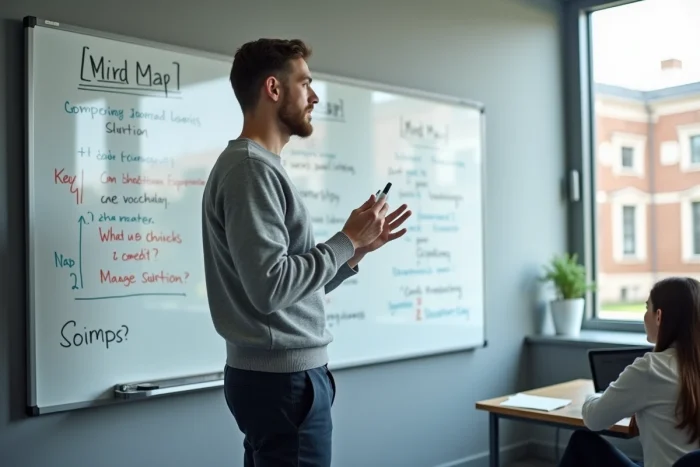
The most structured training programs now include mock exams and individual oral simulations. This shift towards training in real conditions reflects a shared observation: generic advice on stress management or posture does not make much difference without repeated practice.
It is recommended to start simulations early, well before the oral exam dates. The goal is not to recite a presentation but to practice reacting to unexpected prompts from the jury. A preparation partner can play the role of the jury by asking destabilizing questions drawn from the reports.
Filming one’s simulations provides feedback that is hard to obtain otherwise. One can spot language tics, moments when the gaze wanders, and sentences that drag on when content is lacking. This type of concrete diagnosis is worth more than a list of “best practices” read the day before.
Structuring One’s Speech in Front of the Jury
The jury evaluates the ability to organize a statement within a limited time. A method that works in simulation: set the institutional framework in two sentences, formulate a diagnosis of the proposed situation, and then detail the concrete actions a CPE would implement.
This three-part structure avoids the most common pitfall noted in the reports: drowning the jury in generalities without ever proposing a specific action. The jury expects a future professional, not a theorist of school life.
Anchoring in Texts and Current Events in the Educational System
Preparation for the CPE oral exams remains strongly based on reading institutional prescriptions and educational news. Successful candidates are those who spontaneously relate their answers to the context of the current school system, not those who align abstract references.
Concretely, this means keeping up with recent developments regarding the functioning of institutions, priority education, school life management, or EPLE administration. Here are some useful habits:
- Regularly read the Official Bulletin of the Ministry of Education to identify circulars that pertain to the missions of the CPE (student monitoring, educational activities, liaison with families).
- Follow publications from specialized sites like Café Pédagogique, which relay analyses on the CPE profession and the evolution of the competition.
- Compile a notebook of institutional references categorized by theme (school climate, dropout, inclusion, secularism) for quick mobilization during the oral exam.
The approach of “motivation interview and professional posture” is increasingly prominent in the exams. The jury values situated argumentation and projection into the missions, not mere restitution of theoretical knowledge. Citing a text without relating it to a concrete school situation is akin to speaking into a void.
Motivation Interview CPE: Demonstrating a Credible Professional Posture
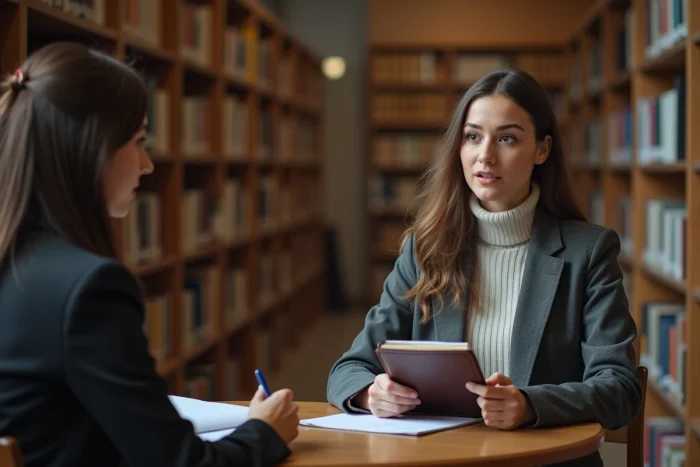
The motivation interview is the moment when the jury seeks to verify that the candidate knows the reality of the profession. This is not about “passion for education,” but about the ability to describe how one would manage a conflict between students, how one would organize the school life service, or how one would work with the management team.
Feedback varies on this point, but one constant remains: candidates who have completed internships or worked in a school setting score more points. In the absence of direct experience, one can rely on field observations, discussions with current CPEs, or reports of professional situations.
Common Mistakes When Presenting Before the Jury
Two mistakes regularly cost places in the ranking:
- Positioning oneself as the “savior” of students without mentioning teamwork with teachers, administration, and external partners. The CPE is a link in a collective, not an isolated actor.
- Reciting knowledge about the functioning of the National Education without relating it to a question posed by the jury. Each answer must respond to the question, not demonstrate the extent of one’s revisions.
- Adopting a tone that is too academic or too familiar. The expected register is that of a professional addressing peers, with rigor and clarity.
Preparation for the oral exams of the CPE competition does not rely on a one-size-fits-all recipe. What distinguishes admitted candidates is the ability to articulate institutional framework, situation analysis, and action proposal, all while maintaining direct language and a posture of a future professional in school life.