The conversion from centiliters to grams does not rely on a fixed equivalence. The same volume can yield very different masses depending on whether it is water, flour, or sugar. Old or family recipes often overlook the precision of a modern scale but impose an unchanged demand for results. Professionals know how to navigate this lack of tools by relying on simple benchmarks and proven conversions. The differences between ingredients, the subtleties of units, and the adaptation to everyday utensils dictate precise, effective methods that are accessible to everyone.
Why converting centiliters to grams changes everything in cooking
Measuring ingredients without a scale reconnects you with a part of instinct and experience. However, successfully making a risen dough or a creamy sauce depends on a precise action: converting volumes into weights avoids many pitfalls. From one ingredient to another, the notion of equivalence fades: what works for water does not hold for flour, sugar, oil, or milk. The hand hesitates, the eye searches for clues – precision matters, especially when the dish allows for no improvisation.
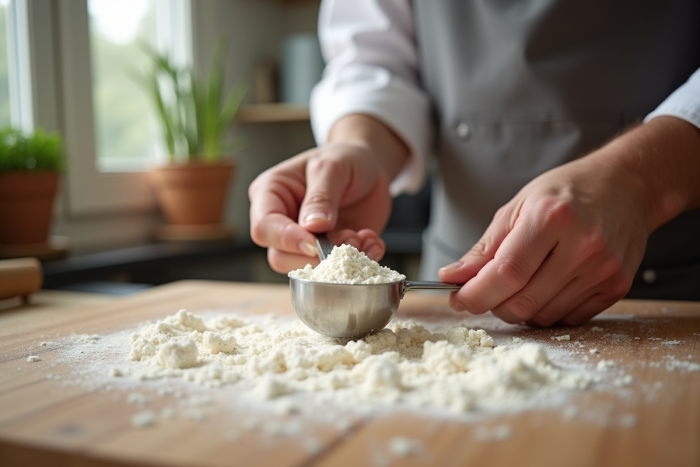
In the absence of a scale, the clever cook relies on universal tools: measuring cup, tablespoon, yogurt pot. Each becomes a peacemaker in the family kitchen or during an improvised fix. To limit surprises, there are proven benchmarks and an essential conversion guide to consult without moderation: 40 cl to grams.
Through trials and home adjustments, conversions eventually become ingrained. Experience breeds boldness, allowing you to correct the excess of a generous hand or adapt to a missing ingredient. Measuring without a scale is not just compensating for an absent tool: it restores the dynamic of cooking, where instinct weighs as heavily as technology.
Practical tables: how many grams for 1 cl according to each common ingredient
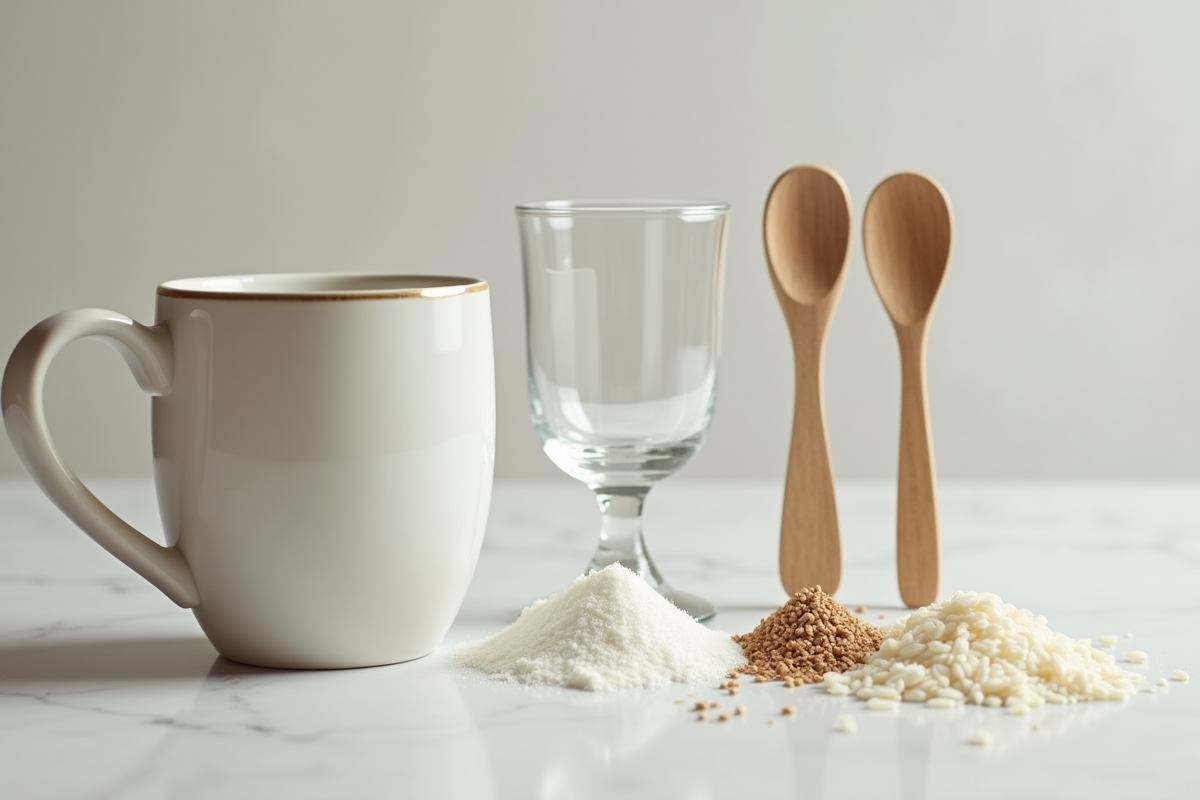
For those who want to organize their practice without a scale, there are a few equivalences to memorize. These benchmarks cover most ingredients found in everyday recipes and make life easier when improvising with what you have on hand.
- Water: 1 cl = 10 g
- Milk: 1 cl = 10 g
- Oil: 1 cl = 9 g
- Flour: 1 cl = 5 g
- Sugar: 1 cl = 8 g
- White wine: 1 cl = 10 g
- Liquid cream: 1 cl = 10 g
- Egg white: 1 cl = 10 g
These benchmarks are invaluable for adjusting each preparation as best as possible. An ordinary measuring cup, a tablespoon, or that yogurt pot forgotten at the back of the refrigerator is enough to successfully make a cake batter, a light béchamel, or a delicate dessert, without sophisticated equipment or headaches.
It cannot be repeated enough: there is no universal rule in cooking; each ingredient follows its own logic. It is impossible to confuse the lightness of a spoonful of flour with the density of sugar or oil. Keeping these values in mind limits mistakes – especially if you venture into baking where every gram has its role to play.
Ultimately, measuring without a scale is about accepting a degree of freedom, gaining autonomy, and rediscovering cooking from a different angle. Sometimes instinct prevails, sometimes the benchmark is king: in any case, every dish successfully made without weighing becomes a true satisfaction.