
What criteria truly distinguish a useful high-tech trend from a mere fad? With the proliferation of connected devices, the strengthening of European regulations, and the evolution of home automation protocols, the parameters to monitor have significantly shifted over the past two years. This article measures the concrete gaps between technological promises and their everyday application.
European Regulation and Everyday Technologies: What Changes Are Actually Happening
The gradual implementation of the European AI Act is changing the conditions under which consumer technologies enter the market. Since February 2025, rules on prohibited practices and general knowledge in artificial intelligence have been in effect. Obligations regarding general-purpose AI models have been applicable since August 2025.
Transparency, documentation, and human oversight are becoming evaluation criteria alongside technical performance. For consumers, this means that products incorporating AI must now provide clear information about their functioning and limitations.
On the connected devices side, the Cyber Resilience Act requires manufacturers to promptly notify discovered vulnerabilities and maintain the security of their products throughout their lifecycle. Specialized resources like those available on nectardunet.com help track these regulatory developments and their impact on technology purchases.
| Regulation | Implementation Date | Consumer Impact |
|---|---|---|
| AI Act – prohibited practices | February 2025 | Mandatory transparency of AI products |
| AI Act – general-purpose models | August 2025 | Enhanced documentation and cybersecurity |
| AI Act – broad application | August 2, 2026 | Systematic human oversight |
| Cyber Resilience Act | Gradual | Notification of vulnerabilities, security monitoring throughout the lifecycle |
This regulatory framework creates a filter that gadgets without serious software support will no longer pass. Before investing in a connected device, checking the manufacturer’s commitment to security updates becomes a profitable reflex.
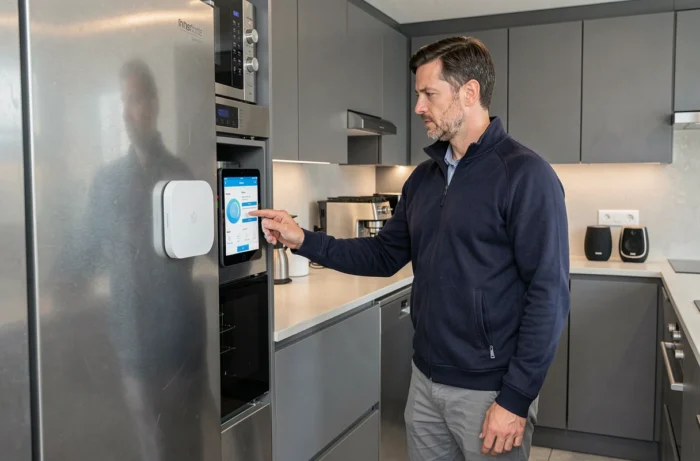
Matter Protocol and Connected Home: Promises vs. Real-World Reality
The connected home concentrates a growing share of high-tech innovation aimed at everyday use. The Matter protocol, intended to unify home automation ecosystems, illustrates the gap between marketing promise and actual experience.
The Matter certification of a device does not guarantee an identical experience depending on whether it operates in Apple Home, Google Home, or Amazon Alexa. A certified sensor may expose all its functions in one ecosystem and only part of them in another. Interoperability remains partial in practice.
On the other hand, recent versions of Matter integrate functions related to active energy management. We are no longer just talking about controlling a thermostat remotely, but about managing consumption based on pricing and the carbon intensity of the electrical grid.
- Check the actual compatibility with your existing ecosystem (Apple, Google, Amazon) before any certified Matter purchase
- Prefer devices whose manufacturer publishes a detailed list of functions supported by platform
- Look into integrated energy management functions that generate measurable savings on the bill
Active energy management replaces simple remote control as a value-added criterion in home automation. A thermostat that adjusts heating based on real-time electricity prices provides a tangible financial benefit, whereas a connected switch remains a marginal comfort.
Cybersecurity of Connected Devices: The Technical Criterion to Examine First
The proliferation of connected devices in a household mechanically increases the attack surface. Each sensor, camera, and voice assistant represents a potential entry point. The Cyber Resilience Act requires manufacturers to maintain security throughout the product’s lifecycle, which changes the game for consumers.
In practical terms, a device whose manufacturer does not commit to a minimum duration of security updates becomes a risk. Entry-level products without a documented patch policy pose a problem that low price does not compensate for.
Security Criteria to Check Before Purchase
The duration of commitment to firmware updates is the first reliable indicator. A manufacturer that announces three years of software support offers a tangible guarantee. One that mentions nothing leaves the device exposed as soon as the first vulnerability is discovered.
A connected device without a documented update policy is a risk, not a savings. The rapid notification of vulnerabilities, now mandatory, also allows for comparing the responsiveness of brands to reported flaws.

Embedded Artificial Intelligence: Local Processing vs. Cloud
Data processing directly on the device (edge AI) is gaining ground against centralized processing in the cloud. For a user, the difference is measured in latency and privacy.
A voice assistant that processes commands locally responds faster and does not send the recording to a remote server. Local processing reduces latency and limits exposure of personal data. This approach is found in recent surveillance cameras, adaptive thermostats, and some headphones with contextual noise reduction.
- Devices with edge AI processing work even during internet outages
- Biometric data (voice, face) remains on the device instead of passing through third-party servers
- Bandwidth consumption decreases, benefiting households with limited connectivity
In contrast, cloud processing retains the advantage for complex tasks that exceed the computing capacity of a local device. The choice depends on the type of data involved: for sensitive information (health, home security), local processing presents a structural advantage.
The high-tech trends that will sustainably improve everyday life are not those that accumulate functions, but those that respond to measurable constraints: regulatory compliance, sustained security over time, active energy management, data processing close to the user. The reliability of software support and the transparency of the manufacturer now weigh as heavily as technical characteristics in an informed purchasing decision.